
The Mayfly Meme.
The Birth, Death, and Corporate Taxidermy of Online Dissent.

In the ever-churning cauldron of internet culture, where trends bubble up and vanish faster than a unicorn’s burp, early April 2025 gifted us a peculiar new obsession: AI-generated images of satirical action figures. These digital toys came boxed in authentic action toy packaging, each a cheeky jab at public figures, political movements, or societal quirks. For a glorious, fleeting moment, it felt like the perfect marriage of technology and subversion. Then, as with all things born on the internet, the suits arrived with their clipboards and focus groups, and the whole affair curdled faster than milk in a heatwave.
It began, as these things often do, in the shadowy corners of niche forums. A user posted an image of a Nigel Farage figurine labelled “Reactionary Bore: Now With Extra Grievances!”. Another featured “Palestine Bore: With Extra Whine,” a blunt but well-intentioned nod to performative activism. The designs were messy, the humour barbed, and the absurdity deliberate. Here, finally, was a meme that weaponised the aesthetic of consumerism to lampoon the very idea of reducing complex issues to collectable commodities.
For a few days, it was glorious. Every scroll through social media unveiled fresh absurdities: a VAR referee with blindfold, guide dog and white stick accessories, a basement dwelling keyboard warrior with rotund belly, bag of Cheetos and sex doll companion.
The best ones walked a tightrope between wit and cringe, their AI-generated imperfections—a hand with six fingers, a slogan misspelt, only adding to their charm. The message was clear: in a world where everything is monetised, even dissent, why not turn the tables and monetise the monetisers?
Alas, the lifespan of online satire is roughly equivalent to that of a mayfly with a caffeine addiction. The first sign of doom came when the supermarket chain Morrisons, unveiled their “Baker From Market Street” action figure. Sponsored content, no less. The promotional blurb gushed about “capturing the artisanal spirit of our sourdough heroes!” The figurine, a rosy-cheeked mannequin holding a baguette, was about as subversive as a loyalty points scheme. Comment sections erupted in despair. “This is like your dad doing the floss dance,” wrote one user. Another quipped, “Next up: ‘Tory MP With Extra Humanity! (Batteries not included)’”
But the floodgates were open. Soon, every brand and their dog—literally, in the case of a “Pets at Home: Good Boy CEO” figure—had muscled in. Corporate social media teams, those tireless necromancers of dead trends, began churning out sanitised, focus-grouped “satire” that reeked of desperation. A fast-food chain released a “Burger Flipper Philosopher” (“Comes with existential dread and a side of fries!”). Even political parties got in on the act, offering “Democrat vs Republican” twin packs where both figures came pre-programmed to shout identical soundbites about “unity.” The irony, of course, was that the joke had long since evaporated. The action figures were no longer parodying consumer culture—they’d become it.
What killed the trend wasn’t just the corporate bandwagon-jumping, though. It was the realisation that the joke had always been on us. However much we crowed about “sticking it to the man” by sharing images of a portly Sunderland United fan with pie and ale accessories, we were still playing the game: generating clicks, engagement, and data points for the same platforms that sold our attention to advertisers. The AI tools we used to create these satirical masterpieces? Trained on datasets owned by tech giants. Even our dissent had an End User License Agreement.
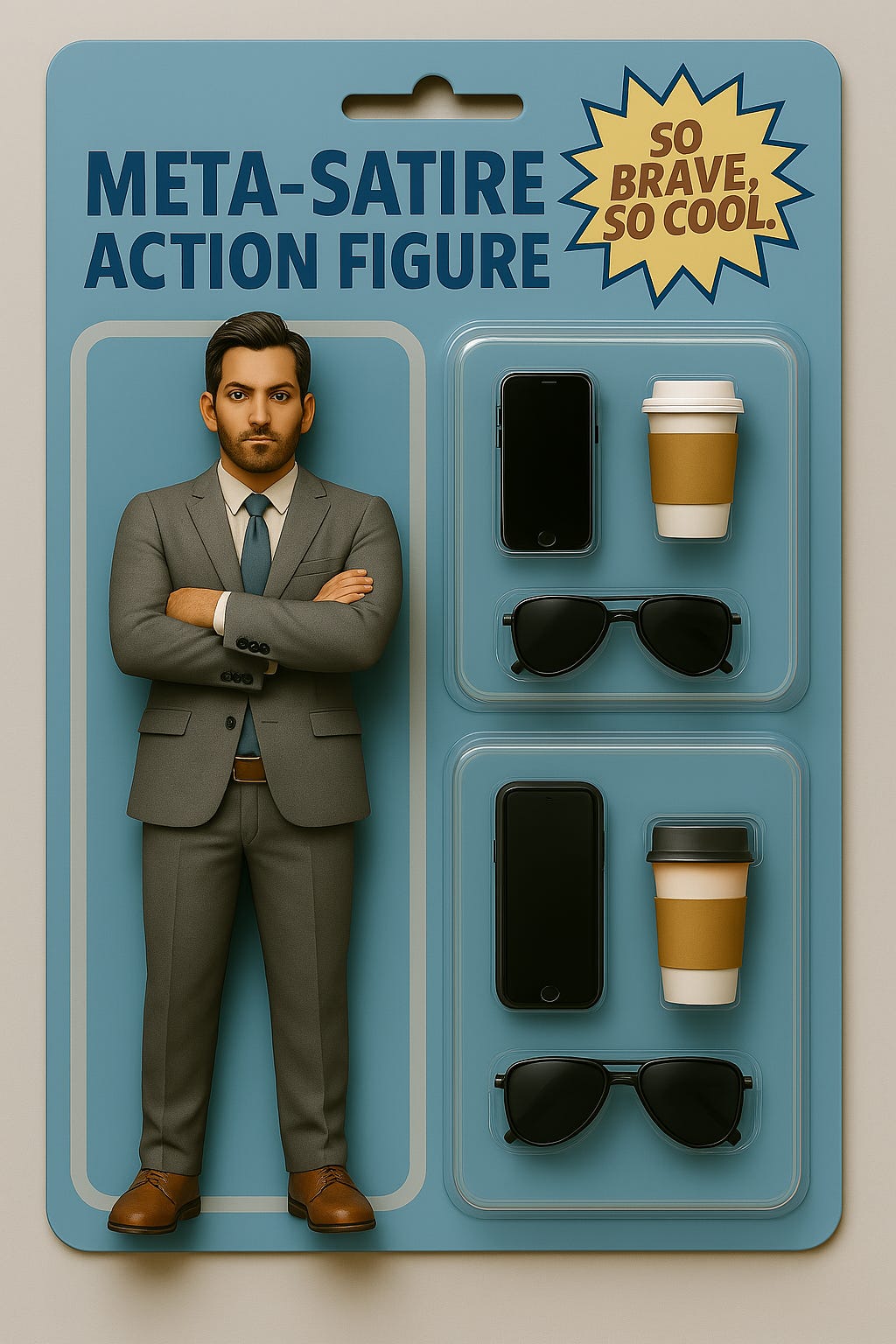
And so, by the third week of April, the trend is as lifeless as a forgotten Tamagotchi. The final nail came when a PR firm launched a “Meta-Satire Action Figure” series, featuring a figurine of a marketing executive creating a figurine of a marketing executive. The caption read, “So brave. So bold.” Comment sections, once ablaze with cynicism, fell silent. There was nothing left to say.
Perhaps this is the inevitable fate of all internet-born satire: to be born quirky, die corporate, and be resurrected as a case study in a branding webinar. Yet, for a brief moment, those janky AI-generated action figures trapped in their blister packs held a funhouse mirror up to our obsession with reducing the world to digestible, shareable chunks. They reminded us that in the age of algorithmic outrage, even our rebellions come pre-packaged, shrink-wrapped, and ready to shelf.
The next trend, no doubt, is already brewing in some Discord server—a guerrilla art project involving holographic NFTs of dissociative badgers, perhaps. Let’s just hope it stays weird long enough to matter. Or, at the very least, that the supermarkets don’t find out about it.